Paso Robles Press editor interviewed for CBS true crime series on local murder case
By Hayley Mattson · Thu Jan 22 2026
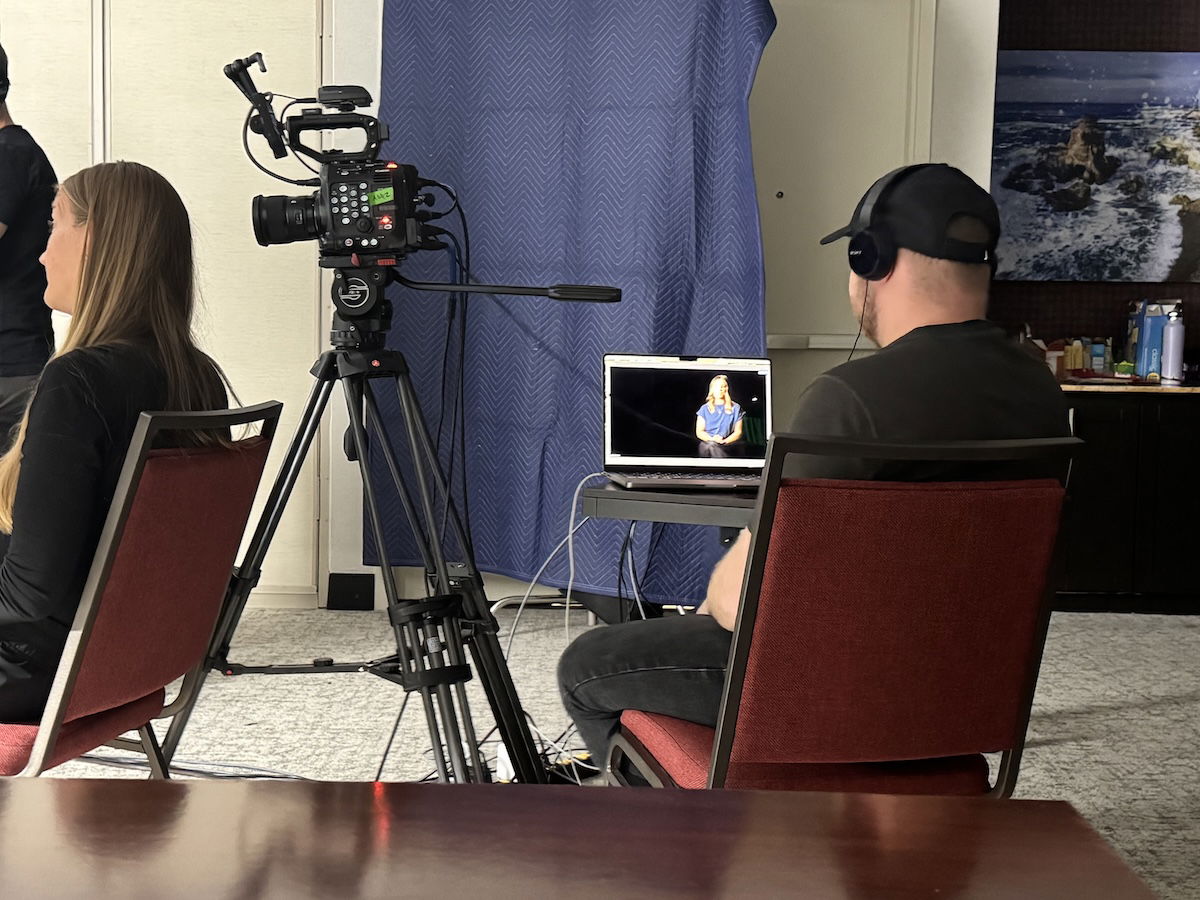
Camille DeVaul reflects on the 2018 killing of Nancy Woodrum in Harlan Coben’s Final Twist, bringing a Paso Robles story to a national audience
PASO ROBLES — When a national television producer called last summer, Camille DeVaul did not immediately think of spotlights or studio lights. She thought of Nancy Woodrum.
Last July, DeVaul, content editor for the Paso Robles Press, was interviewed by CBS Documentaries for a new true crime series created by No. 1 New York Times bestselling author Harlan Coben. The series, "Harlan Coben’s Final Twist," premiered Jan. 7 on the CBS Television Network and is streaming on Paramount+.
The third episode, “No Sign of Nancy,” which aired Wednesday, Jan. 21, centers on the 2018 murder of Woodrum, a Paso Robles hairdresser, mother, grandmother and friend who was killed in her home on Cinco de Mayo (May 5).
For DeVaul, the opportunity marked a full-circle moment — from community member who followed the crime in local headlines, to journalist who revisited the case years later, to a contributor helping tell Woodrum’s story on a national stage.
“I was first introduced to Nancy’s case just as a resident in the community,” DeVaul said. “I remember seeing it on the news and online, but it didn’t really grab my attention until I started working in local journalism.”
That changed in 2023, when the fifth anniversary of Woodrum’s murder approached. Around the same time, San Luis Obispo County Sheriff’s Detective Clint Cole, the lead investigator on the case, retired. DeVaul saw an opportunity to revisit the investigation through the eyes of the detective who led it.
She spent weeks reviewing press releases, court records and public information, building notes before sitting down with Cole for an in-depth interview. The resulting article reflected on the case five years later, tracing the investigation from its earliest days through the arrest and conviction of Carlo Flores, a contractor who had worked at Woodrum’s home.
Cole’s candor stood out to DeVaul. During their conversation, he openly reflected on decisions he wished he had handled differently — including an early phone interview with Flores, whom he initially contacted as a potential witness rather than a suspect.
“That honesty is not something you usually get from law enforcement,” DeVaul said. “He talked about missteps and how, in his mind, the case could have been solved even faster.”
The investigation ultimately hinged on geofencing data, which placed Flores near Woodrum’s home at the time of her murder. Without that digital evidence, Cole acknowledged, Flores might never have returned to the center of the investigation.
That detail, DeVaul said, underscores the broader significance of the case.
“Nancy’s case shows the importance of geofencing and how critical it can be, especially in cases where DNA isn’t what solves it,” she said.
CBS producers later told DeVaul that her five-year anniversary article helped draw their attention to Woodrum’s story. They were researching local coverage nationwide when they came across the Paso Robles Press reporting.
“They told me that having that article accessible online and in print helped push them to want to tell Nancy’s story,” DeVaul said. “That meant a lot, because sometimes it feels like local journalism just disappears into the atmosphere.”
For DeVaul, the interview process itself was a shift in perspective. Accustomed to asking questions, she found herself on the other side of the camera, recounting the case not only as a reporter but as a resident who lived through its aftermath.
“It was surreal,” she said. “There was a lot of pressure to do right by Nancy — to tell her story accurately, but also with heart. She was a real person who mattered deeply to people here.”
The episode places Woodrum’s murder alongside other complex cases featured in the series. The premiere episode, “Billy & Billie Jean,” explores a double homicide tied to cyberbullying and a bizarre neighborhood conflict, while the second episode, “Gambler’s Debt,” follows the killing of a successful businesswoman amid tangled financial motives.
Coben’s series aims to peel back layers in cases that initially seemed straightforward but revealed unexpected twists — a framework that producers felt fit the Woodrum investigation.
DeVaul has previously contributed to national coverage, including appearances on Court TV during the Paul Flores trial for the murder of Kristin Smart. Still, she said, telling a story rooted in her hometown carries particular weight.
“This is a story about one of our own,” she said. “Something horrific happened to her, and that’s not something we should forget just because time has passed or because the case was solved.”
She also sees the moment as a reminder of the role local newspapers play in preserving community history.
“All national stories start locally,” DeVaul said. “Without reporters on the ground, these stories don’t get told. We’re historians in a way — documenting what happens day to day, even when it doesn’t seem significant in the moment.”
As Woodrum’s story reaches a national audience, DeVaul hopes viewers remember not just the crime, but the person at its center — and the importance of supporting local journalism that keeps such stories alive.
“Every word matters,” she said. “Years from now, these articles become the record. That’s why it’s so important to pay attention to local news and support it — because once it’s gone, people realize how much they needed it.”
Feature Image: A cameraman for the CBS true crime series "Harlan Coben's Final Twist," views Paso Robles Press Content Editor Camille DeVaul on his laptop while filming the episode on the murder of Paso Robles resident Nancy Woodrum in 2018. Photo by Hayley Mattson/PRP