Paso Robles City Addresses Street Pothole Questions
By Paso Robles Press · Thu Mar 30 2023
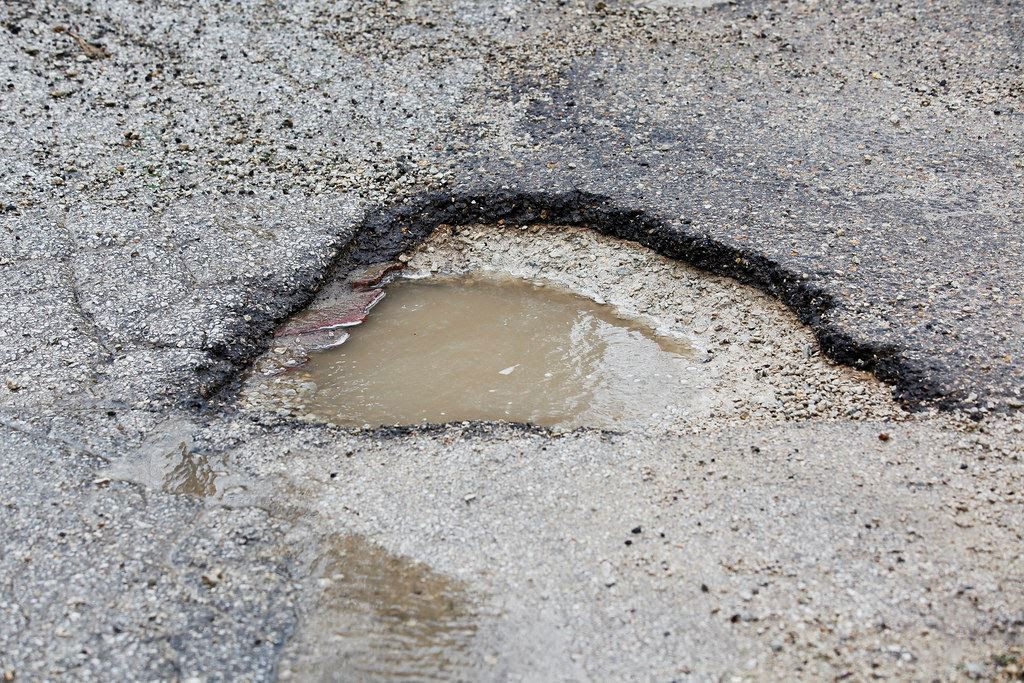
Heavy rain has caused higher than normal amount of potholes throughout the city
PASO ROBLES — Due to the heavy rains that have been pounding the Central Coast since January, Paso Robles is experiencing a higher-than-usual number of potholes in its roadways.
According to the city, it’s not the constant pressure of car tires that wears the road down and causes potholes, but water that is actually causing the damage. They explain, once water gets under pavement, it expands and contracts as it freezes and thaws, pushing against the roadbed and pavement. Once it thaws, there is space left where ice was, so the road is weakened. As cars and trucks drive over the weak spots, they crack and bits of the pavement chip away.
A few common questions were answered about how the City of Paso Robles handles potholes.
Q: How does the city respond to potholes?
A: Staff responds to potholes as they are reported via the MyPaso Request Tracker, emails, dispatch, and/or phone calls. Repair is prioritized depending on the location, safety concerns, and available material. Major arterial roadways such as Creston Road and Niblick Road are typically a top priority due to frequent use.
When not responding to emergencies, staff operate a hot mix patch truck on a grid moving through the city, systematically filling in potholes.
Q: What is the difference between hot mix and cold mix for pothole repair?
A: The hot mix method entails first removing rock, dirt, and debris in and around the pothole, applying an emulsion to help the hot mix adhere to the hole, then filling and sealing the hole with hot mix asphalt. This aggregate mix is heated and maintains the heat while in the patch truck. This method prevents water from being able to penetrate around the patch again, stopping the pothole from reforming (unless flooded by water or another pothole forms next to the patch). This method is considered a more permanent patch and typically has a longer life than cold mix.
Below are other items to note:
- CalPortland supplies hot mix asphalt to the city. Currently, they are only producing 1/2-inch hot mix aggregate, which staff uses effectively on larger potholes.
- The smaller potholes require 3/8-inch aggregate, which is currently not being produced by the city's supplier.
- The city has one patch truck that can do 2-3 tons of mix daily. Staff continues to pick up 2-3 tons of hot mix every day (regardless of aggregate size) to fill in as many potholes as possible.
- It is currently unclear when staff will be able to get 3/8-inch hot mix aggregate.
The cold mix method is when asphalt is simply shoveled into the pothole and smoothed over with a hand tool. This aggregate mix does not require heating. Cold mix asphalt is not a permanent solution and can break up easily depending on a combination of heavy traffic and weather.
Below are other items to note:
- The city purchases pallets of cold mix for pothole repair and is available at all times. Especially when hot mix is not available. Cold mix does not last very long, and it breaks up easily, especially in major roadways.
- This is typically a last resort and an interim quick fix.
Staff continues to fill potholes during dry conditions. Filling potholes during a rain storm is an emergency measure and not a common practice.
Drivers are urged to be vigilant, practice safety, and be patient as city staff works through the rainy season and continue to fill potholes.
Please report potholes at prcity.com/MyPaso, via the MyPaso App, by email to PWadmins@prcity.com or by phone at (805) 237-3861. All reports will be triaged and responded to as soon as possible.