Love Letters Through Time: Valentine’s Day History Preserved in Paso Robles
By Paso Robles Press · Thu Feb 19 2026
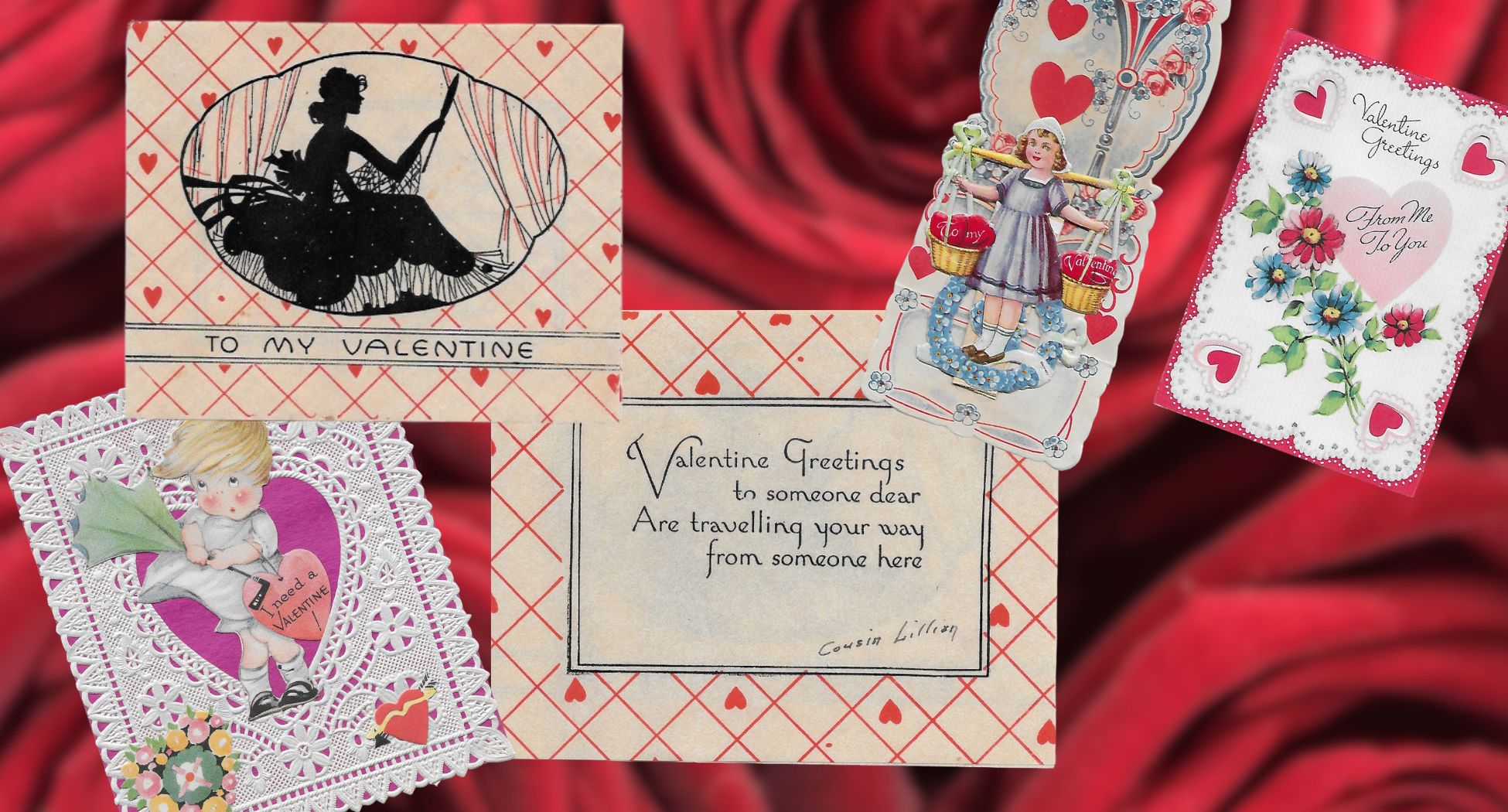
By Paso Robles Area Historical Society
In our archives, the Paso Robles History Museum at the Carnegie Library has several notebooks filled with beautiful vintage Valentine's Day cards. Some of the cards are handmade, and many contain sweet messages to the recipient.
But how did we come to celebrate Valentine's Day? According to history.com, its origins blend ancient pagan rituals, Christian traditions, and centuries of evolving customs.
The identity of St. Valentine himself is something of a mystery. The Catholic Church recognizes at least three different saints named Valentine or Valentinus, all of whom were martyred. One popular legend describes Valentine as a third-century Roman priest who defied Emperor Claudius II. Believing unmarried men made better soldiers, Claudius outlawed marriage for young men. Valentine quietly continued performing weddings in secret until he was discovered and executed. Another version credits St. Valentine of Interamna, a bishop who was also executed for his faith during the same period.
Additional stories portray Valentine as a compassionate figure who helped persecuted Christians escape Roman prisons. One enduring legend claims that while imprisoned, Valentine fell in love with a young woman — possibly his jailor’s daughter — and sent her a note signed “From your Valentine.” Though historians cannot verify these stories, they helped shape Valentine’s image as a heroic and romantic figure, especially during the Middle Ages.
Valentine’s Day may also have roots in the ancient Roman festival of Lupercalia, celebrated in mid-February. This fertility festival honored Faunus, the god of agriculture, and Rome’s legendary founders, Romulus and Remus. Rituals included sacrifices and symbolic acts meant to promote fertility and purification. As Christianity spread, church leaders sought to replace pagan traditions, and in the late fifth century Pope Gelasius declared February 14 as St. Valentine’s Day, effectively ending Lupercalia.
The holiday’s strong association with romance did not fully emerge until the Middle Ages. In England and France, people believed February 14 marked the beginning of birds’ mating season, reinforcing the idea that the date was naturally tied to love. Poet Geoffrey Chaucer famously linked Valentine’s Day with romance in his 14th-century poem "Parliament of Fowls." By this time, exchanging love notes had become popular among the nobility.
Written valentines appeared in the 1400s, with one of the oldest surviving examples written by Charles, Duke of Orleans, while he was imprisoned in the Tower of London. Over time, the tradition spread beyond the elite. By the 18th century, people of all social classes exchanged handwritten notes and small gifts.
The familiar image of Cupid also comes from ancient mythology. Originally, the Greek god Eros, he was later reimagined as the chubby, playful cherub seen on modern Valentine’s cards, symbolizing love’s power to strike unexpectedly.
In the 19th century, printed cards became widely available thanks to advances in printing and cheaper postage. In the United States, Esther A. Howland helped popularize mass-produced valentines decorated with lace and ribbons, earning her the title “Mother of the Valentine.”
Today, Valentine’s Day is celebrated around the world, and more than 145 million cards are sent each year, making it one of the most popular card-giving holidays — proof that its long, layered history still resonates with people everywhere.