Cattlemen address industry challenges, innovation at spring meeting
By Camille DeVaul · Thu Feb 26 2026
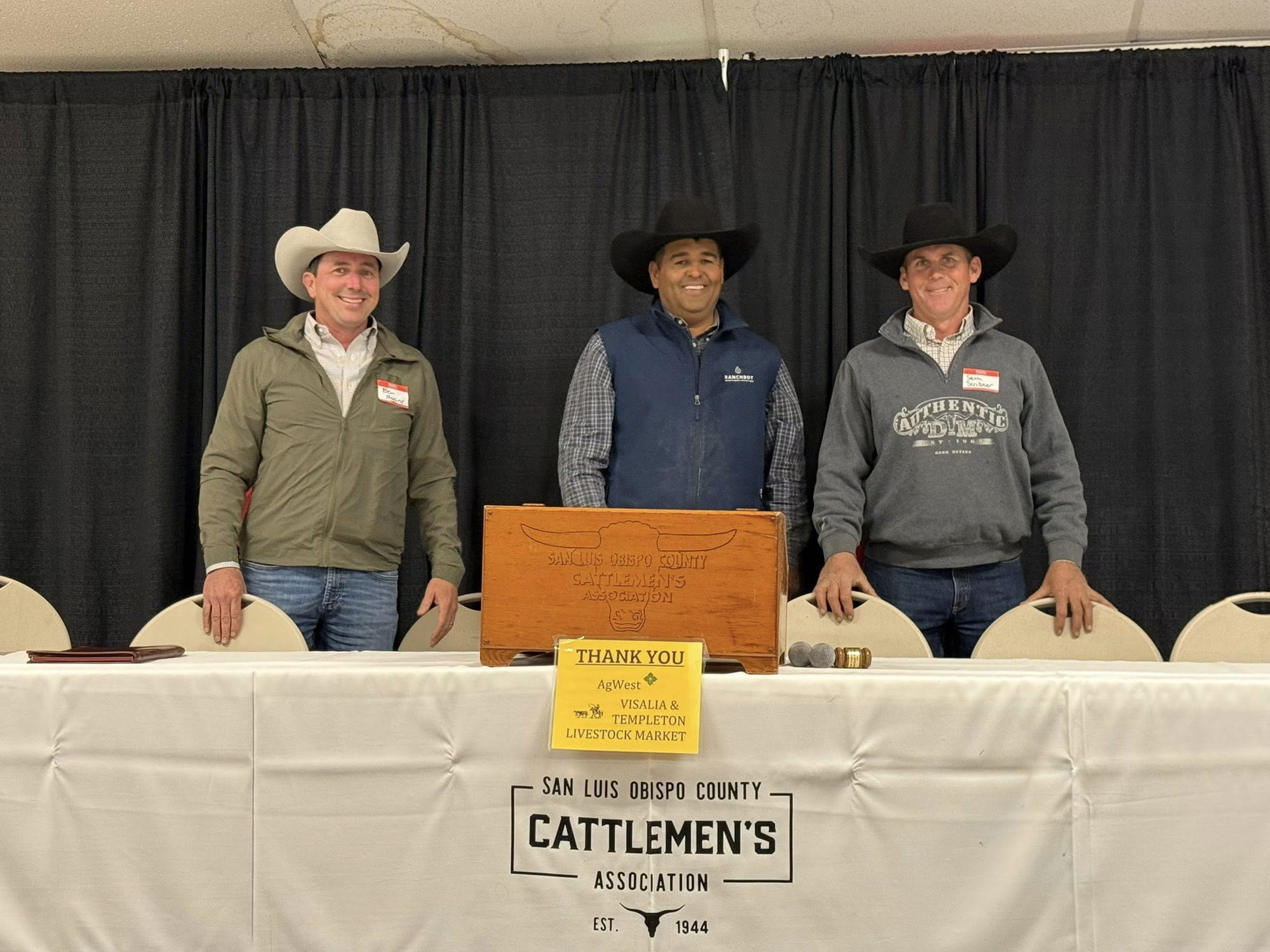
Speakers highlight record beef prices, screwworm threat, and innovation in rotational grazing
NORTH COUNTY — The San Luis Obispo County Cattlemen's Association gathered at the Paso Robles Event Center on Wednesday, Feb. 18, for its annual spring meeting, bringing together ranchers and industry leaders to discuss both the challenges and successes shaping the local beef industry.
The evening featured a lineup of guest speakers addressing issues from emerging grazing technology to national policy concerns. Among them were Kevin Kester, past president of the National Cattlemen’s Beef Association, and U.S. Rep. Jimmy Panetta, who provided insight into federal discussions affecting agriculture.
Bill Dale of the California Beef Council reported that while cattle trade in California remains active and ranchers are seeing record prices, overall cattle numbers have dropped sharply in recent years. Herd numbers peaked in 2021 at 3.9 million head but have since declined by approximately 800,000 head in 2025.
Because $1 is collected per animal — split evenly between the state and national programs — the decline resulted in a $400,000 reduction for both the national program and the California Beef Council. Dale noted that current cattle trade numbers are the lowest recorded since the council’s database was established in 2002.
He also highlighted significant contraction in the state’s packing industry, with the number of cattle processed in California dropping from 1.1 million head in 2009 to about 550,000 last year — a 50% reduction. Despite the shrinking supply chain, consumer demand remains strong. In 2024, the average American spent $400 annually on beef, a 30% increase over the previous year and 50% more than on any other animal protein.
Kester provided a national industry update, noting that cattle prices continue to reach record highs. Recently, the U.S. fed cattle price hit an all-time high of $2.47 per pound, while fresh retail beef prices averaged $9.55 per pound in December — also a record according to Kester. Despite higher prices, retail beef sales volume increased 4.3%, driven in part by historically high quality grades, with prime carcasses averaging nearly 12% and choice around 75%. He said herd rebuilding remains slow, meaning tighter supplies are likely for at least the next two to three years, supporting continued strong markets barring a major disruption such as foreign animal disease.
A significant concern remains the New World screwworm, which could threaten U.S. cattle if it reaches the southern border. While USDA has finalized plans for a sterile fly production facility in Texas, full production capacity, estimated at 500 to 600 million sterile flies per week, is still about 18 months away. Until then, border policy and political considerations may limit Mexican cattle imports. On trade, he downplayed concerns about Argentine beef imports, noting they account for less than 1% of U.S. consumption and operate under established agreements.
He highlighted positive developments with Taiwan removing trade barriers, while emphasizing the industry’s ongoing losses in China, where U.S. beef exports have dropped from roughly $2 billion annually to near zero after many U.S. plants were delisted. Farm bill priorities, tax provisions, conservation funding, and expanded trade promotion efforts also remain key focuses at the national level.
Congressman Panetta praised Kester for his efforts in supporting the beef industry on a national level.
"There's no better representative that I've seen in my experience in Washington, D.C., than Kevin Kester," Panetta shared. "He is from the White House to the Hall of Congress. He is everywhere promoting and pushing and literally living up to the standards that you all make sure he lives up to when it comes to producing beef."
Some local ranchers shared three different GPS collar methods that are being used to rotationally graze cattle without traditional fencing. Through mobile applications, ranchers can establish and adjust virtual boundaries, moving cattle between areas to better manage natural resources and reduce wildfire risk. The technology has allowed producers to graze previously inaccessible land, contributing to fuel reduction efforts.
A report from the organization's treasurer provided some insight into their successful year. The organization reported a successful 2025, ending the year with a net profit of $10,537, driven largely by its annual Play Day fundraiser, which included support from 26 monetary sponsors and numerous in-kind contributors. Funds raised were distributed to several beneficiaries, including The Great AGventure, Cal Poly Young Cattlemen, the Sheriff’s Rodeo, Quiz Jam, the California Mid State Fair Cattlemen's Choice Award, and others.
For more information about the association, visit facebook.com/slocattlemen
Feature Image: The San Luis Obispo Cattlemen's Association held its spring meeting Feb. 18 at the Paso Robles Event Center, where ranchers and industries leaders discussed the challenges in the beef industry. Photo courtesy of SLO Cattlemen's Association